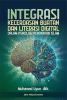


Perkembangan kecerdasan buatan (Artificial Intelligence/ AI) dan arus literasi digital telah mengubah wajah peradaban manusia secara cepat dan mendasar. Dunia pendidikan tidak lagi berada dalam ruang yang statis; ia bergerak dinamis mengikuti transformasi teknologi, pola pikir generasi digital, serta kebutuhan zaman yang terus berkembang. Di tengah perubahan besar ini, Psikologi Pendidikan Islam dihadapkan pada sebuah pertanyaan penting: bagaimana memaknai, mengelola, dan mengintegrasikan kecerdasan buatan serta literasi digital tanpa kehilangan ruh nilai-nilai Islam?
Buku “Integrasi Kecerdasan Buatan dan Literasi Digital dalam Psikologi Pendidikan Islam: Peluang, Tantangan & Praktik Trans-formasi” hadir sebagai jawaban atas kegelisahan sekaligus peluang tersebut. Karya ini tidak sekadar membahas teknologi sebagai alat, tetapi sebagai fenomena epistemologis dan pedagogis yang memengaruhi cara berpikir, belajar, berinteraksi, bahkan membentuk kepribadian peserta didik Muslim di era digital.
Abdalla, M., & Alhadhrami, A. (2022). Artificial intelligence and Islamic ethics: An overview. Journal of Islamic Ethics, 6(1), 45–62.
Abdul Hakim, M. (2025). Artificial Intelligence in teaching Islamic studies: Challenges and opportunities. Journal of Islamic Education Technology, 7(1), 45–59.
Abdullah, M. (2022). “Islamic Ethics and Digital Technologies.” Journal of Islamic Thought.
Adnan, B. (2024). Leveraging artificial intelligence technologies in the service of the Qur’an and its sciences. Journal of Islamic Education Studies, 12(2), 45–62.
Ahmad, F., & Rahman, M. (2020). Pengaruh Pendidikan Agama Islam terhadap Kesejahteraan Psikologis Remaja. Psikohumaniora: Jurnal Penelitian Psikologi, 5(1), 45–60.
Ahmad, Z. A., Rohman, A. T. H., & Rini, D. K. (2025). The Role of Artificial Intelligence in Enhancing Pedagogical Methods in Modern Islamic Education. Journal of Hunan University Natural Sciences, 52(6). https://doi.org/ 10.55463/issn.1674-2974.52.6.9.
Ahmed, R. (2023). Ethical artificial intelligence in Islamic education: A conceptual framework. Journal of Islamic Educational Studies, 12(1), 1–15.
Ahmed, R. (2023). Ethical artificial intelligence in Islamic education: A conceptual framework. Journal of Islamic Educational Studies, 12(1), 1–15.
AI. Ethics and Information Technology, 26(2), 31. https://doi.org/10.1007/s10676-024-09746-w.
Akib, M. M. M., Ishak, H., Zabidi, A. F. M., Sa’ari, C. Z., Muhsin, S. B. S., & Yahya, N. S. M. (2025). Systematic literature review of the impact of Islamic psychotherapy on adolescent spiritual well-being. Journal of Religion and Health, 1-41. https://doi.org/10.1007/s10943-025-02304-8.
Al-Aidarous, N. (2022). Machine Learning Applications in Islamic Art and Architecture. Journal of Islamic Heritage Studies, 4(1), 55–70.
Al-Attas, S. M. N. (1980). The Concept of Education in Islam. Kuala Lumpur: ISTAC.
Al-Attas, S. M. N. (1991). The Concept of Islamic Education in Islam: a framework for an Islam philosophy of education. In ISTAC.
Al-Attas, S. M. N. (1995). Prolegomena to the metaphysics of Islam. Kuala Lumpur, Malaysia: International Institute of Islamic Thought and Civilization (ISTAC).
Al-Attas, S. M. N. (1995). Prolegomena to the metaphysics of Islam: An exposition of the fundamental elements of the worldview of Islam. ISTAC.
Al-Bayhaqī, A. (t.t.). Sunan al-Kubrā. Beirut: Dār al-Kutub al-‘Ilmiyyah. Versi daring: https://hadits.in/bayhaqi.